.svg)

Hair loss is a clinical sign rather than a single diagnosis. Similar patterns of thinning or increased shedding may result from different conditions and may therefore require very different therapeutic approaches.
For this reason, the management of hair loss at DocTor.Kor Hair & Derma Clinic begins with establishing the diagnosis rather than selecting a treatment or procedure.
A Diagnostic Approach to Hair Loss
Evaluation includes a detailed medical history and clinical examination of the hair and scalp, combined with trichoscopy when appropriate. Depending on the clinical presentation, targeted laboratory investigations or additional diagnostic procedures may also be required.
Particular attention is given to differentiating between common causes of hair loss, such as androgenetic alopecia, female pattern hair loss, telogen effluvium and alopecia areata, and inflammatory or scarring alopecias, in which early recognition may be particularly important.
Baseline documentation and objective follow-up can be used to assess progression and treatment response over time, rather than relying exclusively on subjective impressions of improvement.
Individualized Treatment
There is no single treatment protocol for hair loss. Management is selected according to the diagnosis, disease activity and severity, the patient’s medical history, previous treatments and individual therapeutic goals.
Depending on the indication, this may include topical or systemic medical treatment, as well as selected procedural or combination approaches.
Procedures such as microneedling, mesotherapy or PRP are not considered interchangeable treatments for every type of hair loss. Their role is assessed according to the diagnosis, the available scientific evidence and the individual patient.
Treatment is reviewed over time and modified when necessary according to clinical and objective findings.
Medical Treatment and Hair Transplantation: Different Roles
Medical management and hair transplantation address different aspects of hair loss and should not be regarded as alternative versions of the same treatment. In patients with progressive alopecia, appropriate medical management may be important for preserving existing hair and stabilizing the condition.
Hair transplantation is considered only when clinically appropriate, following assessment of the diagnosis, pattern and stability of hair loss, donor-area characteristics and the patient’s long-term treatment plan.
When surgery is indicated, follicular units are transferred from the donor area to areas requiring restoration, with particular attention to appropriate patient selection and preservation of the available donor supply.
Scientific Activity in Hair Disorders
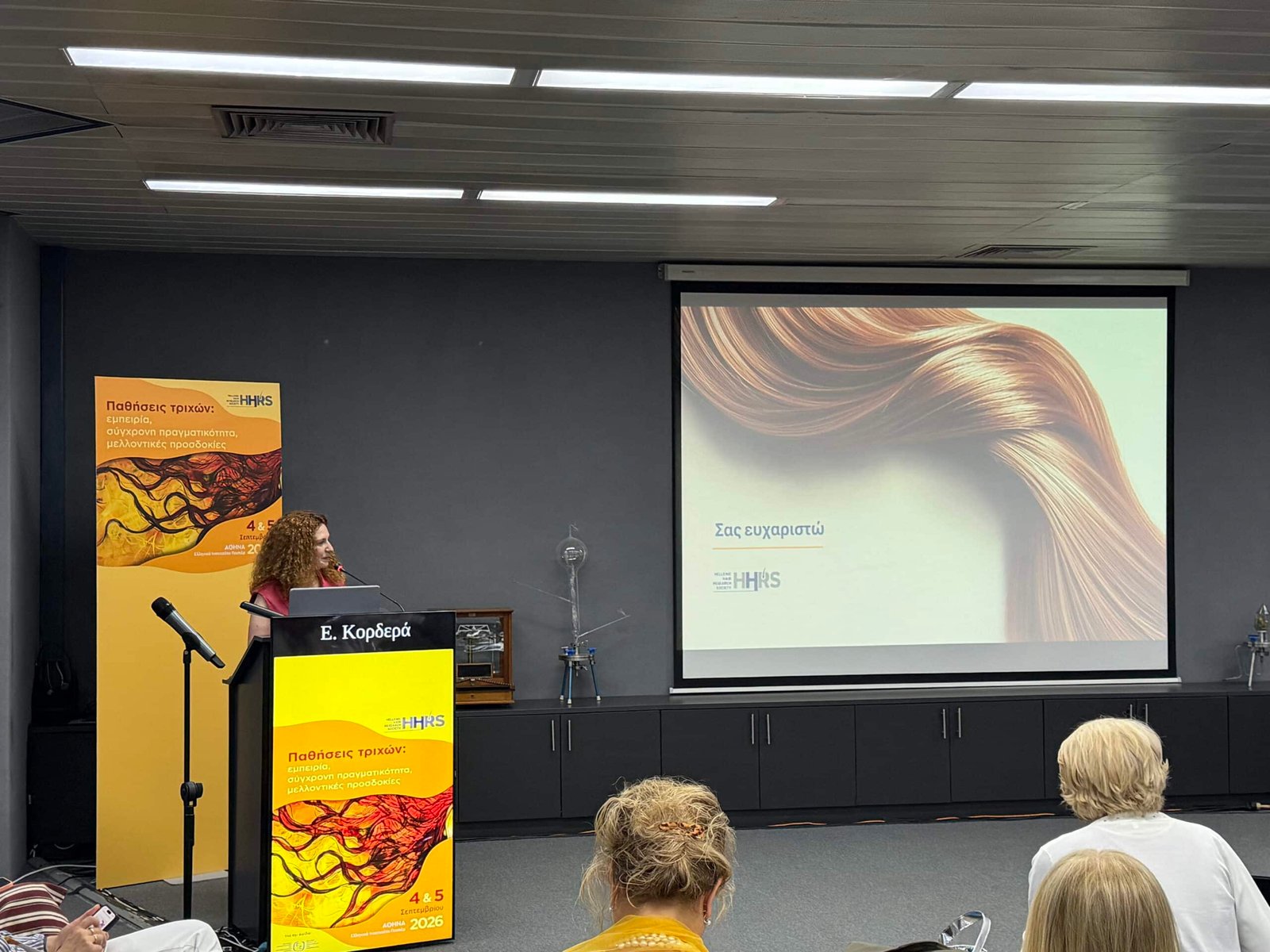
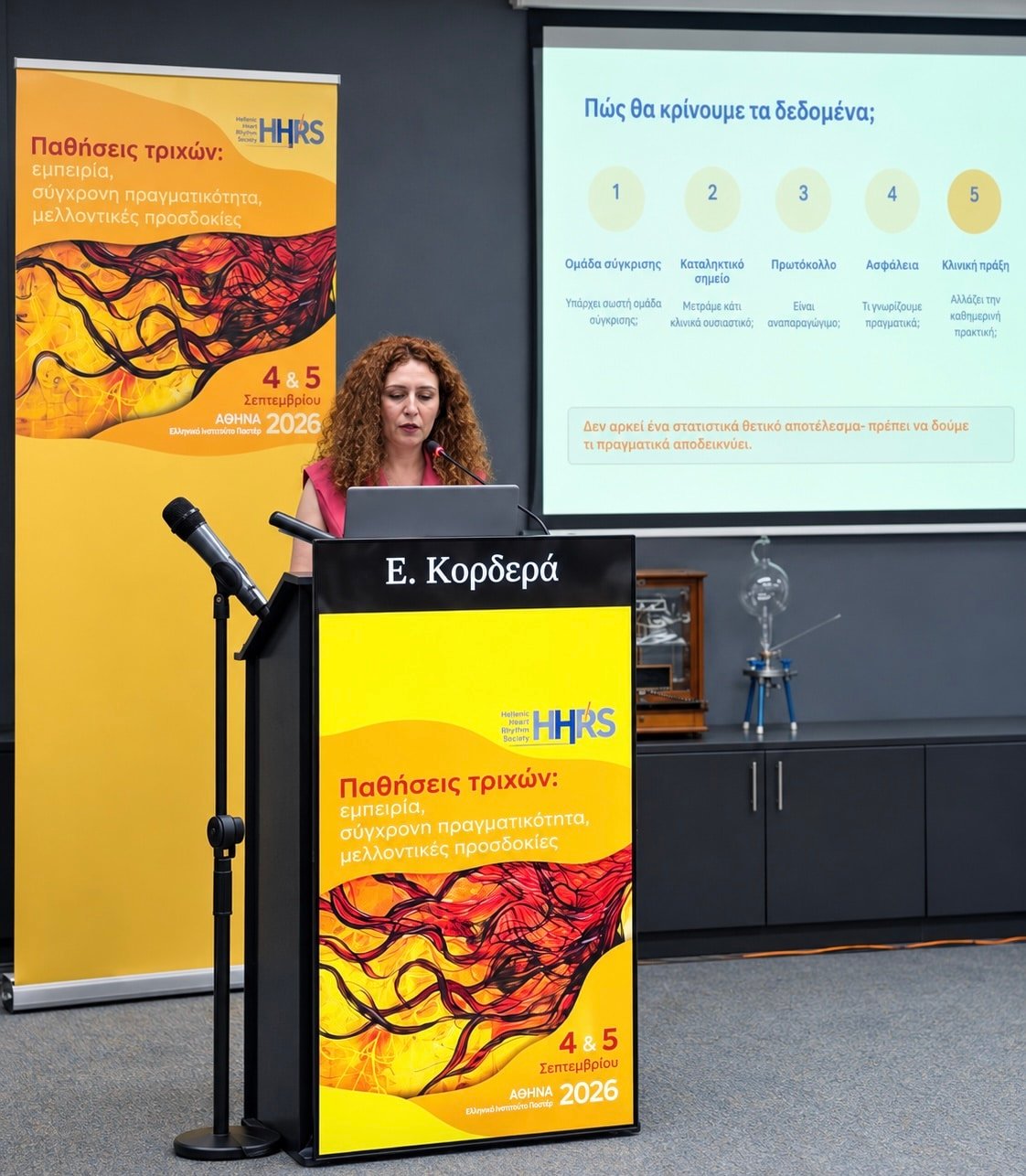
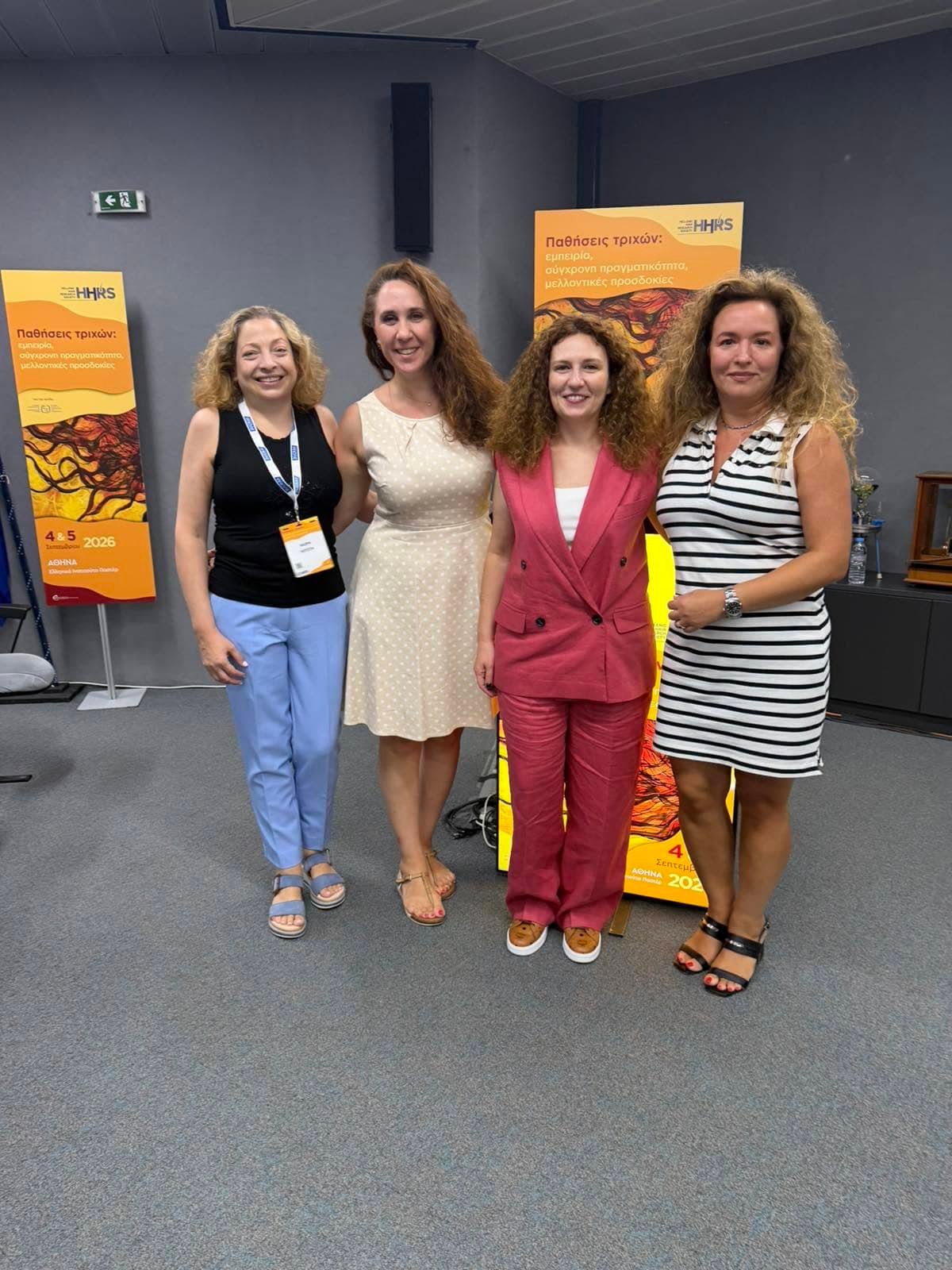
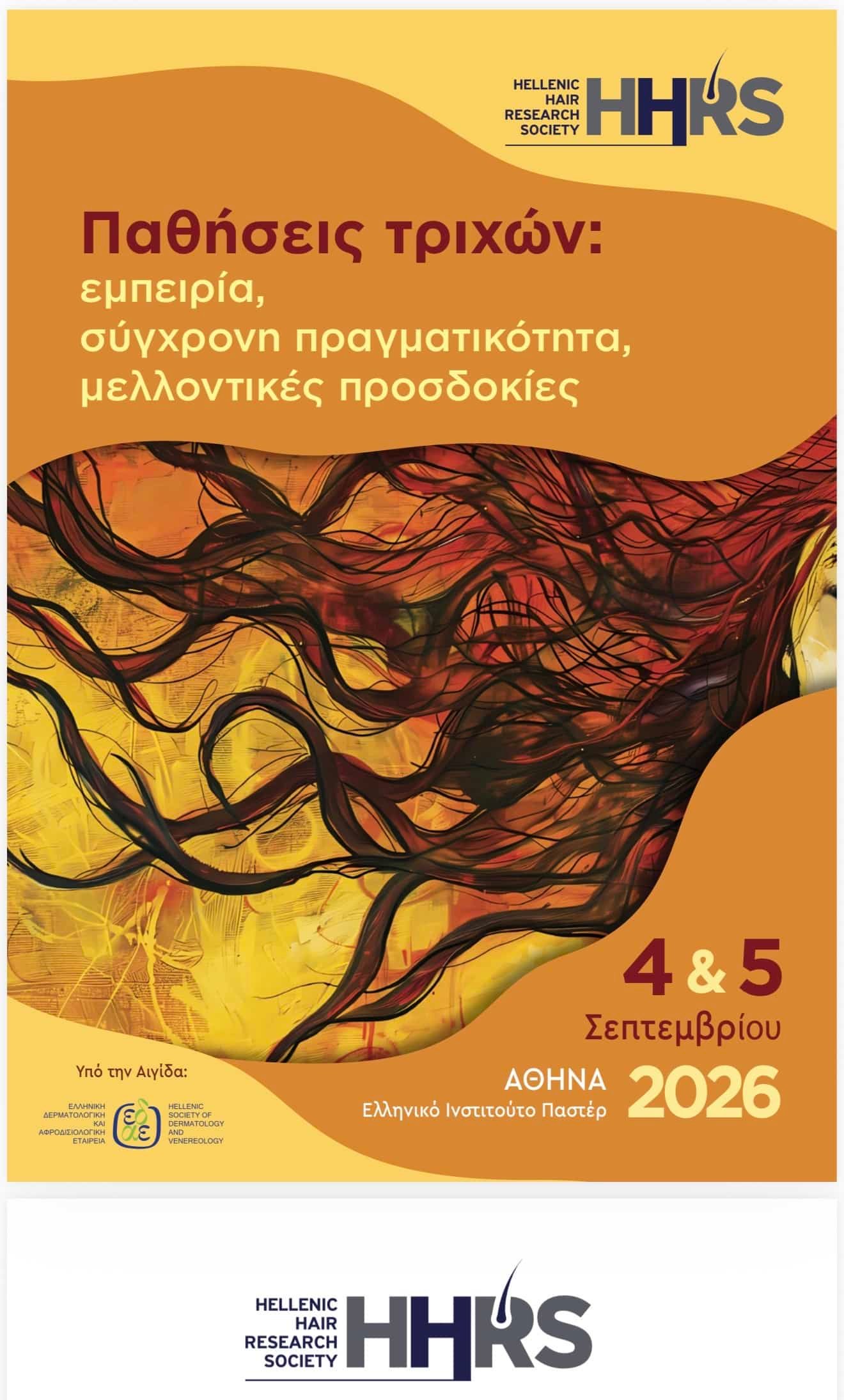
Dr Lia Torlidi-Kordera is a founding member of the Hellenic Hair Research Society (HHRS) and participated as a speaker at the Society’s first Scientific Meeting.
Her lecture, “Mesotherapy and Microneedling in the Treatment of Alopecias: Do They Deliver What They Promise?”, focused on the critical appraisal of the available scientific evidence regarding the efficacy, indications and limitations of these therapeutic approaches.
Her clinical approach to hair disorders integrates diagnosis, medical treatment, objective monitoring and, when indicated, surgical hair restoration, with treatment decisions guided by the individual diagnosis and the available scientific evidence.
For further information regarding the themes and scientific sessions of the two-day event, you can view the detailed program.
When Should Hair Loss Be Evaluated by a Dermatologist?
Dermatological assessment is particularly appropriate when hair loss is persistent or rapidly progressive, when there is a noticeable change in hair density or calibre, when localized areas of hair loss appear, or when scalp symptoms such as erythema, scaling, itching, burning or pain are present.
Early assessment is particularly important when an inflammatory or scarring alopecia is suspected, as the therapeutic goal in these conditions may be to control disease activity and prevent further irreversible follicular damage.
Identifying the underlying condition before starting treatment allows the therapeutic plan to address the cause and type of hair loss, rather than hair loss as a generic symptom.
Frequently Asked Questions (FAQ)
It is a non-invasive, magnified examination of the scalp and hair that provides information aiding in the diagnosis and differential diagnosis of alopecias.
It allows for the objective recording of specific hair growth parameters and can be used to compare the image at different points in time.
No. Laboratory testing is selected based on the medical history, clinical presentation, and suspected diagnosis.
It depends on the diagnosis and the treatment. The hair cycle is slow, and in most cases, several months are required for a reliable assessment of the response.
Not necessarily. These are methods with different indications and varying degrees of scientific evidence, which can be used complementarily in selected patients.
Mesotherapy and Microneedling in the Treatment of Alopecias: Do They Deliver What They Promise?